
Walk into any active card game lobby on Hitclub and you’ll find players who have been coming back for months — some for years. Ask them why, and you won’t hear the same answer twice. One player talks about the card game community. Another mentions the jackpot that’s been building all week. A third just likes that the withdrawal arrives when expected. A fourth opens the app every morning out of habit, checks the daily bonus, and stays for longer than planned.
These aren’t the same player. They’re distinct profiles — different reasons for returning, different ways of engaging with the gaming portal, different things that would make them leave. Understanding why different types of players keep coming back to Hitclub is more honest and more useful than a single catch-all explanation.
Reward gaming portals that have developed loyal player bases — GO88 is a reference point here, having built its community through players with genuinely varied motivations for staying — tend to succeed precisely because they serve multiple return motivations rather than optimizing for 1. Hitclub has developed a similarly varied player base, and examining each segment’s reasons for returning reveals how the portal actually works as a retention product.
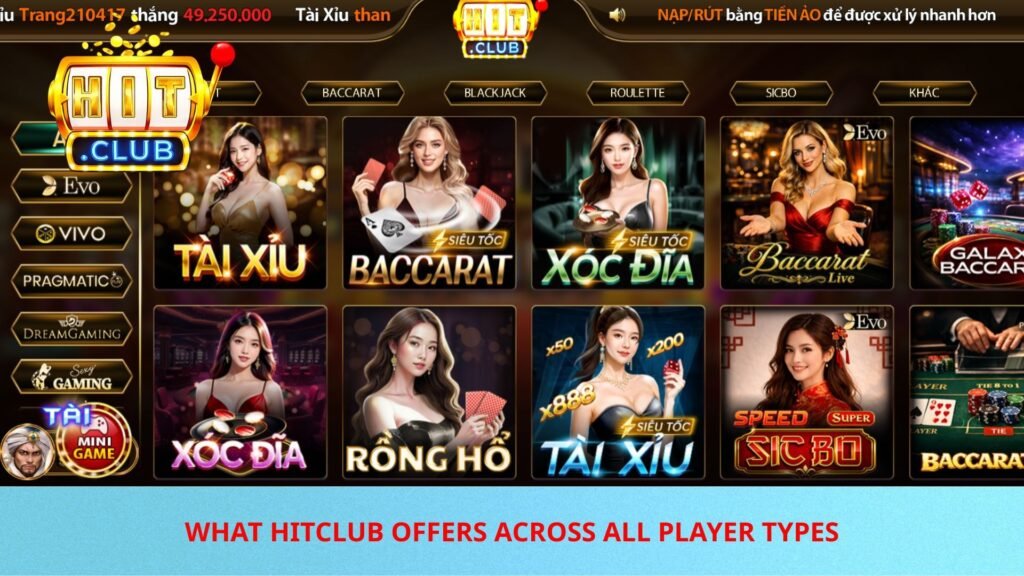
What Hitclub Offers Across All Player Types
Before looking at specific player motivations, it helps to establish the product landscape. The Hitclub game portal covers 4 categories: card games (Tiến Lên, Phỏm, Mậu Binh, Poker), jackpot slots with progressive prize mechanics, live dealer tables with real-time streamed sessions, and arcade-style mini games for shorter play. Each category anchors the return behavior of at least 1 distinct player type.
The Card Game Regular — Returns for People, Not Just Games
The most consistent returning player profile at Hitclub is the card game regular. This player might open the portal every evening, not because they’ve consciously decided to but because the card lobbies have become part of a routine that evolved over months of play.
What draws them back isn’t primarily the game mechanics — they know Tiến Lên or Phỏm better than they need to. It’s the social texture of the lobbies. Familiar opponents. Table dynamics they’ve learned to read. The specific rhythm of a lobby where they know who tends to show up at which hours. The card game community at Hitclub has developed enough density and consistency that it generates social gravity — players return because the community they’ve embedded in is there.
For this player, a portal downtime or a period of poor matchmaking quality is a significant disruption. Not because the game is gone, but because the social context is temporarily unavailable. Their return loyalty is the deepest of any player type — and it’s the type of loyalty that’s most resistant to competitor acquisition efforts, because the social network would have to be rebuilt from scratch anywhere else.
What Would Make This Player Leave
Lobby deterioration. If matchmaking starts pairing them with opponents whose skill level is wildly mismatched, or if peak-hour tables take too long to fill, the social quality that anchors their return degrades. Financial reliability failures would also drive this player away — they’re experienced enough to have strong priors about how a trustworthy portal behaves, and deviation from those priors reads immediately as a warning signal.
The Jackpot Tracker — Returns for Accumulating Stakes
A different kind of regular appears in the slot section: the jackpot tracker. This player has internalized the progressive jackpot cycle at Hitclub — they know roughly how often specific jackpots reset, what threshold tends to trigger player attention, and how to read the current pool size as a signal for when a session feels worth extending.
Their return behavior is driven by external information rather than internal habit. When the jackpot is low following a recent payout, they might visit briefly and leave. When it’s been building for several days and the pool has grown significantly, they schedule longer sessions around it. The jackpot mechanics at Hitclub function as a scheduling tool for this player — the portal tells them when it’s worth showing up, and they respond accordingly.
(Jackpot mechanics and progressive prize pool details: https://hitclub.cab/)
This player is loyal to the mechanic more than the portal per se — they’ll go where the jackpot structure feels fair and the prize pools grow to interesting levels. Hitclub’s consistency in running its progressive mechanics without the payout anomalies that make some portals’ jackpots feel manipulated is what keeps this player’s return behavior directed here rather than elsewhere.
The Reliability Seeker — Returns Because Nothing Went Wrong
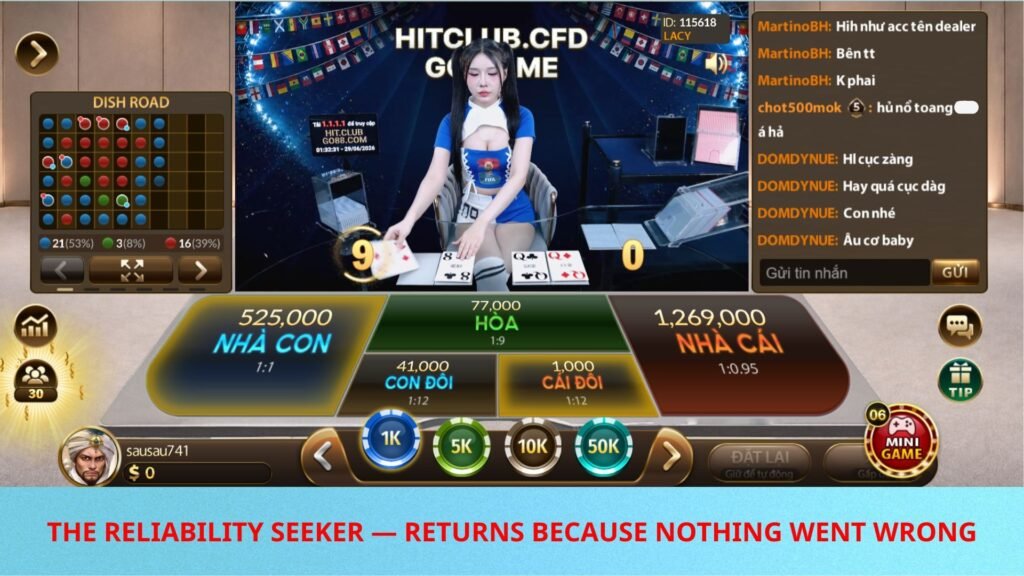
A third player type is harder to profile because their engagement is less intense. They don’t have strong community ties and they don’t track jackpot cycles. They return to Hitclub simply because nothing has given them a reason to leave.
Their experience has been consistently as-expected: deposits reflect quickly, withdrawals arrive within the communicated window, the app works on their phone, the game they want to play is available when they open the session. None of these things are exciting. Together, they produce a player who has no incentive to go looking for alternatives.
This player type is underappreciated as a retention asset because they’re quiet — they don’t generate community enthusiasm, they don’t refer many players, and they’re not the visible face of the portal’s community. But they represent a significant share of regular, low-friction users whose continued presence is a direct function of Hitclub’s operational consistency.
What would make them leave is asymmetric: a single significant negative experience — a withdrawal delayed without explanation, a deposit that doesn’t reflect, an account issue that support can’t resolve quickly — outweighs months of unremarkable positive experience. Their loyalty is soft but their departure trigger is specific and avoidable.
The Bonus Optimizer — Returns Around the Reward Cycle
A fourth player type structures their return visits around Hitclub’s reward and promotion cycle. The daily check-in bonus is a trigger that gets them to open the portal on days when they hadn’t planned to. The weekly event promotion motivates sessions timed to maximize reward accumulation. The referral incentive drives them to actively recommend the portal because the incentive makes recommendation feel purposeful rather than altruistic.
This player reads the promotion terms carefully — they’re the ones who notice when conditions change and who would respond negatively to any shift away from the transparent terms Hitclub currently offers. Their return behavior is incentive-dependent in a way that makes them more price-sensitive than other player types, but their active engagement with the portal’s reward architecture also makes them valuable as community participants and organic advocates.
Hitclub’s consistent, clearly stated promotion structure is what keeps this player’s return behavior pointed at the portal. An offer that turns out to be misleading doesn’t just cost them 1 session — it converts them from an advocate into a warning voice in the communities they participate in.
What These 4 Player Types Have in Common
Different return motivations, but a single underlying requirement: the portal has to keep its end of an implicit agreement.
For the card game regular, the agreement is that the lobbies will be active and the financial transactions will be reliable. For the jackpot tracker, the agreement is that the progressive mechanics will run with integrity. For the reliability seeker, the agreement is that nothing will go wrong. For the bonus optimizer, the agreement is that the terms will be what they appear to be.
These agreements are all versions of the same thing: Hitclub will behave consistently with what it has led each player type to expect. The portal’s ability to keep that agreement across 4 different player relationships is what produces the varied but consistent return behavior that its active community reflects.
Conclusion
What keeps players coming back to Hitclub is not the same thing for every player — but it is a consistent thing for each player type. Card game regulars return for the social community their sessions have built. Jackpot trackers return when the prize pools signal it’s worth showing up. Reliability seekers return because nothing has broken their low-friction experience. Bonus optimizers return around the reward cycle that the portal’s transparent promotion structure makes predictable. Together, these 4 profiles describe a reward gaming portal that has developed the depth to retain different types of players over the long term — which is a different and more valuable achievement than simply attracting any player in the first place