
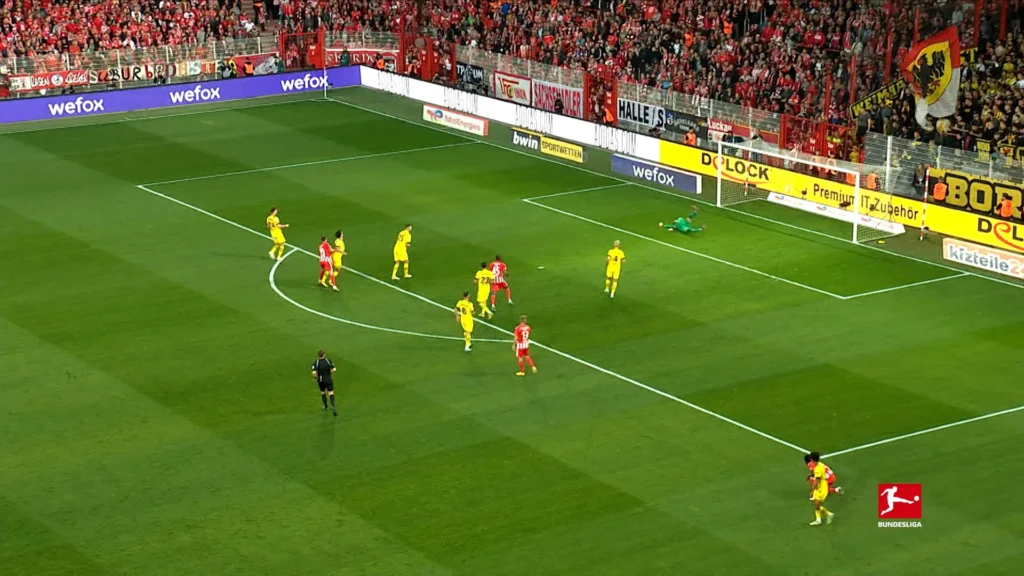
Comparing older Bundesliga data with the 2022/23 season only becomes useful when you treat past numbers as a baseline and 2022/23 as a potential deviation from that baseline, not as an isolated highlight reel. The goal is to separate “still true” patterns from “now different” signals—like changes in goal volume, xG, or comeback rates—so that your understanding of the league evolves instead of freezing at last year’s assumptions. When this comparison is done systematically, it gives you concrete hypotheses for future seasons and betting decisions rather than vague impressions about the league “feeling more attacking” or “more volatile.”
Why cross-season comparison is a reasonable way to look for new trends
Bundesliga stats pages show that 2022/23 produced 971 goals at 3.17 per game—17 more goals and a slightly higher average than the previous campaign—marking the fifth straight season above three goals per match. Earlier seasons like 2021/22 already had high averages, but the incremental rise in 2022/23, combined with specific details such as Bayern scoring 92 league goals and matchdays like round 32 delivering 42 goals, suggests an environment where attacking emphasis remained strong or even intensified. Comparing those numbers directly to previous years is reasonable because it reveals whether 2022/23 was just another data point in a long trend or whether it sharpened existing tendencies—like high scoring and comeback frequency—enough to change how you interpret fixtures and markets.
Choosing a data-driven lens before comparing seasons
To avoid drowning in numbers, you need to decide which lens you are using when comparing seasons: goals and scorelines, advanced metrics like xG, or team‑level over‑ and under‑performance. League‑wide stats for 2021/22 give you baseline figures for goals per game and distribution, while 2022/23 “season in numbers” summaries provide the updated totals, records and extremes that might signal a shift. xG league tables and team breakdowns then add a second layer by showing whether changes in actual goals reflect new attacking quality or just a different level of finishing and variance compared to previous years. Choosing that lens up front stops you from making unfocused comparisons and keeps each cross‑season check tied to a clear question.
Comparing key league-level metrics: goals, comebacks and 0–0s
The Bundesliga’s official 2022/23 numbers highlight several league‑wide features that invite comparison with previous seasons. Total goals rose to 971, 17 more than 2021/22, keeping the average above three per game and reinforcing the league’s reputation as the highest‑scoring among the big five. Across those 34 matchdays, only 15 games finished 0–0, while matchday 32 alone produced 42 goals, and Bayern kept a multi‑season streak of 90+ goals alive with 92 strikes, reinforcing the idea that goalless draws remained rare events in a generally open competition. League summaries also point to a high number of matches where teams came from behind to collect points, strengthening a trend toward comeback‑friendly game states that had already been visible in earlier campaigns.
Mechanisms behind shifting league-wide scoring patterns
When you see incremental increases in goals and comebacks over consecutive seasons, it makes sense to look past raw totals and think about why those changes might be happening. Tactical analysis and preview pieces around 2022/23 pointed to widespread use of high pressing, aggressive full‑back play and quick transitions, which naturally produce more shots and high‑value chances than deeper, lower blocks. At the same time, fitness and substitution impact increased, as reflected by a growing number of goals from substitutes and late scoring spikes, which help explain why teams were more capable of erasing deficits or turning narrow leads into high‑scoring wins compared with earlier phases of the Bundesliga era. When you anchor trend‑seeking in these mechanisms rather than in total goals alone, your cross‑season conclusions become more robust.
Adding xG and “xG vs actual” to confirm or question trends
Expected‑goals tables and dashboards for recent Bundesliga seasons show how shot quality and volume evolved across the league, offering a way to distinguish “true” attacking improvement from temporary finishing streaks. For example, xG league tables around 2022/23 show Bayern generating far more xG per match than most rivals, with actual goals exceeding xG, suggesting a repeat of the long‑term pattern where they combine high chance creation with above‑average finishing. Comparing that to 2021/22 xG difference charts, which already highlighted gaps between expected and actual goal differences for certain teams, allows you to see whether 2022/23 reinforced earlier over‑ and under‑performance or revealed new clubs whose results deviated strongly from underlying numbers. If the same teams keep overshooting xG year after year, that hints at sustainable quality; if a new team suddenly appears with large positive or negative gaps, that may signal a more specific 2022/23 trend worth monitoring.
Using simple tables to structure cross-season questions
Because trends only emerge when you look at multiple seasons side by side, it helps to compress key metrics into a compact table instead of juggling separate pages or memories. Public sources provide enough information to build a minimal comparison—goals, goals per game, and notable records—for at least two seasons.
| Season | Total goals | Goals per game | 0–0 draws (approx.) | Notable scoring notes |
| 2021/22 | 954 | ~3.03 | Few (under 20) | Already above 3 goals per game overall |
| 2022/23 | 971 | 3.17 | 15 | Fifth straight 3+ avg; Bayern 92 goals |
From this high‑level view, you can immediately see that 2022/23 did not reverse the attacking trend; instead, it slightly intensified an existing high‑goal profile while keeping 0–0 results scarce. This kind of structural comparison justifies continuing to treat goalless outcomes as low‑probability events and supports the idea that goal‑based markets should be evaluated in a “high‑average” context rather than assuming a regression to older, lower‑scoring norms.
Where UFABET-style use cases depend on recognising new trends
If someone is using these cross‑season insights for practical decisions, the connection between trend detection and actual market behaviour matters as much as the statistics themselves. In a broad online environment with functionality similar to ufa168, where bettors can jump quickly between seasons and leagues, those who compare 2021/22 and 2022/23 data are better positioned to notice that Bundesliga totals lines, BTTS prices and favourite odds have already adjusted to the now standard 3+ goals environment. Recognising that the “new trend” of high scoring is, by 2022/23, already baked into lines prevents users from over‑estimating the edge of backing overs or goal‑heavy matches just because the league averages are high. Instead, the practical application shifts to finding micro‑trends—like specific teams that diverged from league norms in 2022/23 compared to earlier seasons—and mapping those onto narrower markets inside the same interface.
Avoiding false positives: where apparent trends fail under comparison
Cross‑season trend hunting can easily produce illusions if you chase every difference between two seasons. Short‑term anomalies—like one team’s unusually high finishing percentage, an injury‑hit stretch or a small cluster of extreme scorelines—may stand out in 2022/23 but disappear when you widen the window to several years. Statistical summaries caution against reading too much into a single season’s quirks without checking multi‑season averages and regression toward the mean, especially in metrics like shot conversion and goalkeepers’ save percentages that are known to swing with luck as well as with skill. A disciplined comparison asks whether a pattern appears for only one year or whether it builds on a prior trajectory; only the latter deserves to be treated as a new structural trend with predictive weight.
Where casino online style thinking conflicts with slow trend analysis
The mindset required to mine cross‑season data for new Bundesliga trends is slow, cumulative and sceptical, which is the opposite of the high‑frequency decision style encouraged by rapid‑turnover gaming products. In a casino online setting, immediate feedback and frequent stakes make it natural to over‑react to short streaks, a habit that can quietly bleed into football analysis if you let a handful of 2022/23 results redefine your understanding of the league. Treating season‑over‑season comparisons as a long project—updating them periodically, waiting for patterns to repeat, and refusing to change conclusions based on one dramatic matchday—helps keep your thinking aligned with the slow moving nature of genuine trends rather than with the fast rhythms of other gambling forms.
Summary
Using previous seasons’ statistics alongside 2022/23 Bundesliga data is a structured way to detect genuinely new trends instead of reacting to isolated headlines. League‑level comparisons show that 2022/23 slightly intensified an already high‑scoring environment, with 971 goals, a 3.17 average and few goalless draws, while xG and multi‑season tables help distinguish enduring patterns from one‑year noise. When those comparisons are interpreted cautiously—checking mechanisms, avoiding over‑fitting and acknowledging that markets often adapt—they become a foundation for more informed questions about future seasons and for more measured use of stats inside real betting interfaces.