
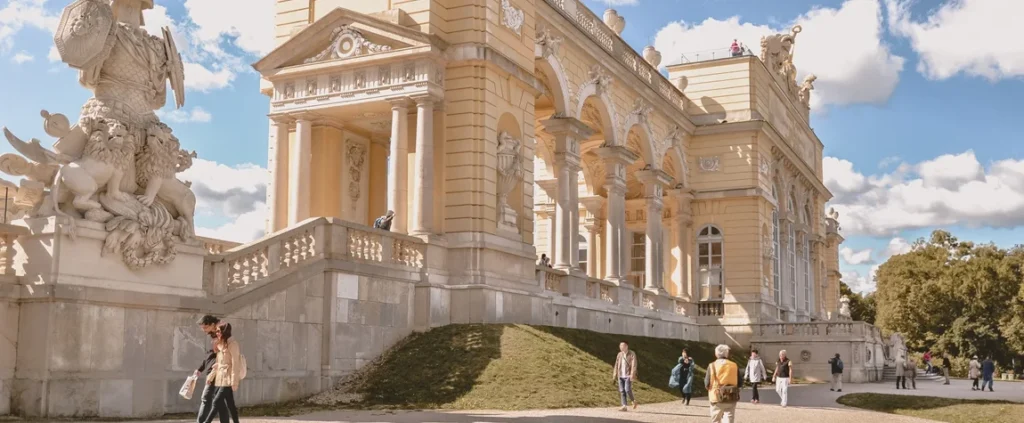
Vienna is often introduced through its palaces, ceremonial buildings, and concert halls. This image is not false, but it is incomplete. A first-time visitor can easily leave with the impression that the city is defined only by imperial scale and formal beauty. In reality, Vienna becomes much more interesting when it is approached through its everyday structure: its districts, public transport logic, local markets, river spaces, residential streets, and mixed-use neighborhoods. To feel the city, it is necessary to move beyond the postcard route.
That is why an attentive visitor should build the trip around lived urban spaces rather than only around monuments, and even when the day includes short breaks to check a route or browse pages such as the chicken road online game, the more valuable task is to understand how Vienna connects historical prestige with practical urban life. The city rewards observation. It becomes clearer when you notice not just what was built for display, but what continues to shape daily movement, local habits, and public experience.
Why Vienna Feels Different from Other Capital Cities
Vienna has a particular urban discipline. The city is large, but it rarely feels chaotic. Streets are organized in a readable way, transport works as an extension of the public realm, and districts often maintain distinct social and architectural identities. This order can make Vienna seem reserved at first, yet that reserve is part of what gives the city depth. It is not a place that reveals everything through spectacle. It reveals itself through consistency.
For this reason, travelers who want to “feel the city” should not focus only on famous buildings. Vienna is better understood through transitions between districts, through the relation between historic and residential areas, and through the way public infrastructure supports daily life. The palaces are part of the story, but not the whole story. They explain one layer of Vienna. The rest appears in markets, apartment blocks, side streets, parks, tram lines, and waterfront zones.
Start with the Inner City, but Do Not Stay There Too Long
The historic center is a useful starting point because it provides orientation. The former imperial core shows how Vienna organized power, religion, commerce, and ceremony within a compact urban frame. Walking through the central streets helps a visitor understand the city’s historic density and its emphasis on ordered public space.
Still, the Inner City should be treated as an introduction, not as the final answer. It tells you how Vienna presented itself, but not necessarily how Vienna lives. The center is important because it offers a baseline. Once that baseline is clear, the city becomes more interesting outside it.
The Ringstrasse also matters for this reason. It is not just a boulevard lined with major institutions. It is a statement about urban transformation. It shows how Vienna shifted from a fortified city to a modern capital with space for administration, culture, and controlled growth. Understanding this ring helps explain why later exploration of outer districts feels coherent rather than random.
Go to the Markets to Understand the Social Side of Vienna
A city cannot be understood only through formal architecture. In Vienna, markets are among the best places to observe daily rhythm. They reveal how local and international influences meet, how residents use public space, and how commerce shapes neighborhood identity.
The best-known market streets are worth visiting not only for food, but for structure. They show how Vienna accommodates both routine and change. Around these spaces, you can often see small restaurants, specialty shops, and mixed-age crowds that make the city feel less ceremonial and more immediate.
Markets also challenge the stereotype that Vienna is static. They show movement, adaptation, and a level of urban flexibility that is easy to miss if the trip is limited to museums and monumental squares. For a traveler interested in the real city, this is essential.
Explore Residential Districts Where the City Becomes Legible
Some of the most revealing places in Vienna are not “sights” in the narrow sense. They are neighborhoods where housing, transit, commerce, and leisure exist in balance. Walking through residential districts with older apartment buildings, local bakeries, schools, and courtyards gives a more accurate sense of how the city functions.
These districts matter because Vienna has long been shaped by housing policy and urban planning. The city is often discussed in relation to public housing and social infrastructure, and this background becomes visible in the built environment. Streets feel lived in rather than staged. Parks are integrated into neighborhoods. Everyday services remain accessible. This makes Vienna one of the few major cities where urban planning itself becomes part of the travel experience.
A visitor who wants to feel the city should therefore include time in districts beyond the classic center. The goal is not to chase hidden gems for their own sake, but to see how Vienna organizes ordinary life with unusual care.
Use the Danube and Canal Areas to See Another Vienna
Many visitors associate Vienna with palaces and cafés, but the river spaces reveal another side. The Danube Canal area, in particular, shows a more contemporary and informal layer of the city. Here, the atmosphere changes. The built environment feels less ceremonial, public space becomes more relaxed, and the city opens to newer cultural uses.
These waterfront areas are important because they break the idea of Vienna as purely historical. They show that the city also has zones of experimentation, leisure, and younger social energy. This is where a visitor can see how infrastructure and culture interact in the present rather than only in the past.
The broader Danube zone also helps explain Vienna’s scale. Without seeing water-related spaces, a first-time traveler may leave with too narrow an image of the city. The river and canal areas widen that image and make Vienna feel more complete.
Do Not Ignore Parks, Cemeteries, and Peripheral Viewpoints
To feel Vienna properly, it helps to include places that slow the tempo. Parks are not only breaks between attractions. They are part of the city’s social fabric. People exercise, read, meet friends, and rest there. These spaces show Vienna at its most functional and least performative.
Cemeteries may also seem unusual on a first itinerary, but in Vienna they can be deeply revealing. They reflect memory, class, religion, and civic culture. They also offer a quieter type of urban experience, one that fits the city’s reflective character.
Peripheral hills or elevated viewpoints add one more layer. From above, Vienna appears less as a set of icons and more as a connected urban system. You begin to understand the relationship between the old center, outer residential districts, green zones, and transport lines.
How to Build a Better Vienna Itinerary
A stronger Vienna itinerary should combine the Inner City with one market area, one or two residential districts, a canal or river walk, and a major public park. This balance prevents the common mistake of seeing only imperial Vienna. It makes room for the lived city.
Vienna is compelling not because it overwhelms the visitor, but because it remains coherent at every scale. The palaces matter, but they are only one expression of the city. To truly feel Vienna, you need to see how people move, gather, shop, rest, and live within it. That is the point where Vienna stops being a historical showcase and becomes a real urban experience.